
 |

|
|
|
|
|
|
John
Rebus - Detective Inspector, Edinburgh, Scotland,
dubbed "Tartan Noir"
"Resurrection Men"  Scotsman
Ian Rankin is the top best-selling mystery writer in the United Kingdom.
Sales of his books alone account for 10% of the entire British crime market.
All this is for a reason, aptly demonstrated by Rankin's latest outing,
Resurrection Men. Scotsman
Ian Rankin is the top best-selling mystery writer in the United Kingdom.
Sales of his books alone account for 10% of the entire British crime market.
All this is for a reason, aptly demonstrated by Rankin's latest outing,
Resurrection Men. 
This book is number thirteen in the Detective Inspector Rebus series. It takes as its lead character the hard drinking, rough-around-the-edges Edinburgh policeman John Rebus. Rebus' modus operandi is doing things on his own and his own way, and, needless to say, he is proud of it. He is well known for his insubordination. In fact, as the book begins, Rebus has been suspended as punishment for throwing a full mug of tea at his commanding officer, Chief Super Templer. He is being shipped off to the Police College. The hope is that as a result of intensive "retraining," he will regain a greater respect for teamwork, discipline, and authority. The book takes its title from the fact that a century ago Resurrection Men of Edinburgh were grave robbers, supplying dead bodies to medical schools. In this case, the name is given to a group of men who have been sentenced to time at the Scottish Police School for bad behavior. They need to "rise again" in terms of how they are viewed by their superiors. Back in Edinburgh, Rankin has us follow a protégé of Rebus, Detective Sergeant Siobhan Clarke, as she investigates the death of an Edinburgh art dealer. He was murdered mysteriously with a hard rock to the head. At the Police College, Rebus and his teammates are assigned to reinvestigate the six-year-old unsolved murder of an Edinburgh lowlife. At first, the two cases seem to have little in common, but as the investigations deepen, it appears that they are linked in some critical way. The "resurrection men" split up into small teams to revisit long-buried clues and details. All the while, Rebus is afraid they will uncover potentially damaging facts that might reflect negatively on him. It turns out he was involved in the old case. We also find that he has been sent to the Police College for a reason other than tea throwing. He is doing some solo inside snooping, his targets being several of his classmates. Clarke, as she runs her simultaneous investigation, shows herself as a sharp, cynical, and very good police person. She seems set to fall in the footsteps of the soon-to-retire Rebus. By the next book or the following, Clark probably will replace Rebus as the title character of the series. And, she should easily fill the role. Rebus has trained her well. That Clarke and others in the book are drawn in significant depth is important, because the characters are what keep the pages turning. When Rebus and Clarke together go after "Big Ger" Cafferty, a notorious gangster who controls the Edinburgh criminal underground, it becomes obvious why Rebus is good at his job. For him, good and evil are blurred. Not that he can't spot the bad guys. His eye is unfailing. But he knows them and can work with them because of the "ignore the rules," anti-authoritarian person that he is himself. |
|
|||||||||||||||||||||||||||||||||||||||||||||||||||||||||||||||||||||||||||||||||||||||||||||||||||||||||||||||||||||||||||||||||||
|
The going gets
tough at several points; once even, Rebus finds
his life in serious peril. But much of the book is spent talking, grousing,
and drinking. Alcohol, and plenty of it, is the fuel of choice for almost
all the senior police officers. Fill-ups can come morning, noon, not just
night. Rebus is also a rock 'n roll aficionado, a wonder to find an REM
fan in a Scottish detective near retirement age. But it's these kinds of
surprises that give the characters depth.
And, to make things interesting, everyone keeps in touch constantly via cell phone. So, even at the Police Academy, Rebus can maintain close contact with Clark. He can follow the current murder investigation, as he proceeds with his own six-year-old case, all the time keeping a sharp eye on fellow police officers who may be a bit less honest than they look. If the Rebus series is winding down, this is certainly not a cause to celebrate. However, the good news is that you can't go wrong with Resurrection Men. Hopefully, the series with its multifaceted characters and dense narratives is good for at least one or two additional books prior to retirement of the boozing Scottish detective. (Reviewed by Bill Robinson 02-03-03)
Read a chapter excerpt from Resurrection Men at MostlyFiction.com |
|||||||||||||||||||||||||||||||||||||||||||||||||||||||||||||||||||||||||||||||||||||||||||||||||||||||||||||||||||||||||||||||||||||

|
Bibliography (with links to Amazon.com):Inspector Rebus Mysteries:
Short Story Collections:
Other Novels:
Written as Jack Harvey:
*All three thrillers are published in The Jack Harvey Novels (2000) (back to top) Book Marks:
(back to top) About the Author:
Ian married Miranda Harvey in 1986 and moved to London where he worked in journalism, rising from Editorial Assistant at montly magazine call "Hi-Fi Review" to editor. He continued writing novels during this time experimenting with various genre. In 1988 Ian was elected a Hawthornden Fellow, and is also winner of the 1991-92 Chandler-Fulbright Award, one of the world's most prestigious detective fiction prizes (funded by the estate of Raymond Chandler). Ian now divides his time between Edinburgh, London and France, with his wife and two sons. |

©1998-2003 MostlyFiction.com |





























 from
3 reviews
from
3 reviews 


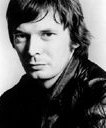 Ian
Rankin was
born in 1960 in the Scottish village of Cardenden and was educated locally.
While young, he dabbled in creating comic books and then writing music
lyrics and by the time he went onto Edinburgh University, his poetry had
already won several prizes. While at university, Ian turned from poetry
to the short story and again won several literary prizes. One of the short
stories until it become a novel. In fact, when he should have been studying
towards a PhD in English Literature he was writing his first three novels,
the last of these became his first Inspector Rebus novel.
Ian
Rankin was
born in 1960 in the Scottish village of Cardenden and was educated locally.
While young, he dabbled in creating comic books and then writing music
lyrics and by the time he went onto Edinburgh University, his poetry had
already won several prizes. While at university, Ian turned from poetry
to the short story and again won several literary prizes. One of the short
stories until it become a novel. In fact, when he should have been studying
towards a PhD in English Literature he was writing his first three novels,
the last of these became his first Inspector Rebus novel.

