
 |

|
|
|
|
|
|
Derek
Strange/Terry Quinn - Ex-cops, Private Investigators,
Washington D.C.
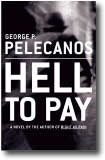
"Hell to Pay"
It doesn't take long for me to figure out that it is Pelecanos' intention to have us question Derek Strange's visit to Chinatown, especially in light of some of the cases that are coming his way. I also realize how much I am really enjoying the novel. Pelecanos writes about the gritty side of the nation's capitol; those neighborhoods ignored by the federal government types and tourists alike; where racism, violence, and drugs are a part of everyday life. His style is to stick us smack in the middle showing us the underbelly, but then turning around and showing us that good families still call this home. Derek Strange is a middle-aged black man, an ex-cop who turned private investigator with his own business. He has a white partner, Terry Quinn, who is another ex-cop, but is newer to the private investigation business. (Right as Rain tells the full story of how they hook up.) The reason Janine beeped Derek is to tell him to meet up with two female investigators, who have been trying to reach him. These women are also ex-cops and another "salt and pepper" team who are "aligned with some do-goodnik, pro-prosti organization." Using grant money, their job is to retrieve young runaways who have turned to prostitution; as they say, the only crime in which "the perp is the victim." The women have too much work to do and want to hire Derek for a case. So Derek takes up the offer; it's an easy one that he raps up in a night. While on surveillance he realizes that the women gave him this job to see how he'd react; the abusive john he's videotaped is a cop. But, Derek has no moral ambiguity when it comes to a cop using his power in the wrong way. Convinced he's right for the job, they then hire him to find a fourteen-year-old white girl who is a runaway from the suburbs and assumed to be hooking in the city. Derek turns the case over to Terry. Early evenings, Derek and Terry coach a PeeWee football team. The same one that Digger tells Garfield Potter about in the opening chapter as to where Potter might find Lorenze Wilder who owes Potter $100. Lorenze's nephew plays on the PeeWee team. Mind you, Digger does warn Potter not to mess with Lorenze Wilder's sister or kid; we learn later what's behind this advice. So when the 9-year old kid becomes one more victim of violence, Derek decides to investigate on his own. What comes out of Terry and Derek's parallel investigations are the results of a unending cycle of poverty and revenge; adding to the fray are Terry and Derek - each battling with their own ideas of justice. |
|
||||||||||||||||||||||||||||||||||||||||||||||||||||||||||||||||||||||||||||||||||||||||||||||||||||||||||||||||||||||||||||||||||||
|
If noir fiction is about hard-boiled cynical characters and bleak sleazy settings, well this novel is about as good as it gets; too bad its talking about a real place. In these neighborhoods, racism begets racism just as revenge instigates an unending cycle of retaliation. If nothing else, Hell to Pay sheds a bit of reality on how much care is required and still how hard it is to get these kids out from under their neighborhoods (and sometimes their own families), to help them lead a different life than what's offered around them. After PeeWee practice, Derek is ever vigilant, making sure each child is safely back in his home as night falls. Even at that, these kids live in fear and learn posturing just to survive on a daily basis:
I'd do this novel wrong if I didn't mention the use of music throughout. Everyone is always playing some kind of tune. It's like it is never quiet in these neighborhoods. For the most part, I didn't know the majority of the musical references, but I assume much to be current rap. I had better luck recognizing some of the tunes that Derek or Terry listened to, however, there is a lot of R&B (or whatever) that I didn't recognize. I wish the book came with a sound track. From what I read, music is a Pelecanos trademark, so perhaps Pelecanos should follow Laura Esquivel's example and include a music CD with his novels, the way she does with The Law of Love. But, in a sense, not knowing the music works for me. It's one more way of saying that I'm not part of the world depicted in this novel. I might be able to believe I have a better understanding from having read the novel, but it's a foreign world to me just the same. I've said it before and I'll say it again, the best reward for maintaining this Web site is discovering new writers that I might have otherwise missed. This is my first Pelecanos' novel, but not my last. There's something about this novel that just stays with me, perhaps the Washington Post says it the best, "His books will burn itno your brain like no others." In the end, my only regret in reading Hell to Pay is that I didn't read Right as Rain first. (Reviewed 02-14-2002) Amazon
readers rating: |
||||||||||||||||||||||||||||||||||||||||||||||||||||||||||||||||||||||||||||||||||||||||||||||||||||||||||||||||||||||||||||||||||||||

|
Bibliography (with links to Amazon.com):Featuring Nick Stefanos:
Featuring Demitri Karras:
Featuring Derek Strange and Terry Quinn:
Other:
(back to top) Book Marks:
(back to top) About the Author:
As a modern crime fiction author, Pelecanos is very much a descendant of the hard-boiled and noir schools. His style is tough and direct, in the best hard-boiled manner. All of his novels take place in Washington, D.C. and in the Maryland and Virginia suburbs; however, his plots do not involve the usual cadre of politicians or national intrigue, but instead depict the crimes and passions of the streets. His novel King Suckerman was a finalist for the Golden Dagger Award and is being produced as a movie by Sean Combs, and his novel, The Sweet Forever, was named a Notable Book of 1998 by Publishers Weekly. The HBO series, The Wire, is based on his screenplay. He
lives in Silver Spring, Maryland, with his wife and two children.
|

©1998-2003 MostlyFiction.com |






























 from
2 reviews
from
2 reviews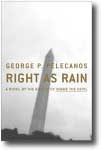


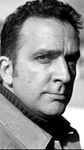 George
P. Pelecanos was born in Washington, D.C. in 1957. He is a graduate of the
University of Maryland at College Park, and has worked as an electronics salesman,
shoe salesman, bartender, construction worker, and independent film producer.
He is a former employee of Circle Films, the company that produced the early films
of Joel and Ethan Coen (like Blood Simple and Miller's Crossing)
and brought John Woo's The Killer to the U. S.
George
P. Pelecanos was born in Washington, D.C. in 1957. He is a graduate of the
University of Maryland at College Park, and has worked as an electronics salesman,
shoe salesman, bartender, construction worker, and independent film producer.
He is a former employee of Circle Films, the company that produced the early films
of Joel and Ethan Coen (like Blood Simple and Miller's Crossing)
and brought John Woo's The Killer to the U. S.

