
 |

|
|
|
|
|
|
Homocide
Detective
Lou Boldt and
Police Psychologist Daphne Matthews
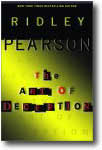
Seattle, Washington "The Art of Deception"
Lt. LaMoia catches a "jumper" case that quickly turns into a homicide investigation. When the call comes in, Daphne Matthews is just leaving the Shelter where she has been doing volunteer work for years. Actually, she's presently over-volunteering hoping that in some way this makes up for her guilt at having one of her girls jump to their death earlier in the year. So, when Daphne hears the call on her car radio, she decides to go over to the Aurora Bridge. Oddly, she discovers Deputy Prair of the Sheriff's Department on the bridge, which annoys her since he had once had a bout of stalking her that has never left her feeling comfortable about his presence. An ex-cop, Prair is not well liked by members of the Seattle PD. LaMoia sees them talking and comes to Daphne's rescue, helping her get away from him. When they see a trail of blood that looks like it could have happened if a body had been carried from a car trunk or back seat and thrown over the bridge railing, Daphne is secretly relieved that this case was not a jumper. However, she still decides to make the case her own and volunteers her services to LaMoia. The first thing that LaMoia asks her to do is to run over to a fish-processing plant and interview a twenty-year-old Ferrell Walker who suspects that the victim described in the newspaper is his sister Mary-Ann. Ferrell says that his sister has been missing and her boyfriend, the no-good, girl-friend-beating Lanny Neal, isn't telling him anything. Then again, Ferrell blames Neal for causing him to lose his fishing boat after his father died and his sister decided to quit fishing with him. As Mathews watches him gut fish, she wonders if she's handled this whole thing correctly. "He was more kid than adult, she thought. A lovesick brother with a fishing knife sharp enough to split hair --- she reminded herself to thank LaMoia for this one." This Ferrell Walker is not exactly a stable character and Mathews realizes that some kind of accidental transference has taken place between her and Walker. Walker gets this notion that she will welcome his help on the case; and, no matter how she says no to his help, he's there with evidence --- which they need. But it's worse than that. He, or someone, is stalking her; it's really hard to tell. In fact, after all these years of helping others overcome fears and victimization, Mathews discovers how fear incapacitates first hand; a very interesting position for a police shrink to find herself in. Meanwhile, Lou Boldt is lead on a different case, one that has been open for months. He's been dogged by two missing women cases, each woman having simply disappeared out of ordinary lives. The first one, Patricia Randolf went missing about two months prior. The second one, Susan Hebringer, disappeared only weeks ago. As the mother of one of his daughter's schoolmates, Boldt knew her, thus for a man whose trademark is his empathy for the victim, this case goes beyond personal. It is dragging him down. The Seattle PD knows very few facts about the disappearances; accept that Hebringer reported a peeping Tom prior to abduction. Thus, when an out-of-town woman complains about a similar incident that occurred while bathing in her hotel room; LaMoia, who was working the desk when the call came in, hopes that this could be a break for Boldt. |
|
||||||||||||||||||||||||||||||||||||||||||||||||||||||||||||||||||||||||||||||||||||||||||||||||||||||||||||||||||||||||||||||||||||
|
During this call, Boldt is visiting his old friend, Mama Lu, (The First Victim) who has called him in for a favor. Although at first it just feels like another distraction, Boldt's case does get a boost. Mama Lu wants him to clear the name of an engineer that was killed while fixing a water main that broke when a sinkhole opened up on Third Avenue. Mama Lu says that his death was not an accident and that to say so brings shame to the family since it means he didn't know his job. She wants Boldt to confirm her suspicions of foul play. Boldt, consumed with his guilt over his ineffectiveness in solving the missing women cases, agrees to look into Chen's death --- not because he really cares about doing this favor, but he sees a connection with the location. Chen died near where witnesses said they last saw Hebringer and Randolf. And this leads him to want to know more about Seattle's Underground city, the one that lies underneath a part of Seattle. Unlike his normal trademark, Pearson does not place science or technology central to this novel's plot. We do benefit form Pearson's knack for in-depth investigation in the exploration of Seattle's Underground which is historically interesting and described so well it is easy to picture. Central to this novel is Daphne Mathews, a police psychologist, an expert at manipulation (which is the art of deception) and the jargon that comes with the profession. But it's not exactly as you would think it would be. Despite her training, she is not at all in control. Daphne, the ever-wise counselor for everyone else, finds herself learning what it really feels like to be afraid. That all her textbook knowledge goes out the window when one is faced with a real situation. "There were no words for her, only a pounding heart, a dry tongue, and the chills that came with the knowledge of what she had done. She chastised herself for that decision --- she'd allowed the emotion of fear to overcome any hope of rationally negotiating her way out. Had she been on the outside of this, observing it, she could have identified the victim's bad decision making at every turn." Did I say that there is no science in this novel? I'm wrong! Pearson, through Daphne Mathews, is actually meticulous about the field of psychology when used with police work. In my review of Middle of Nowhere, the previous novel in this serious, I had mentioned that I felt that Pearson seemed to be "dumbing down" the series. With this novel, I don't have that complaint at all. Pearson seemed back on his mark-- the dialogue was snappy and the events moved right along. If anything, there are a few leaps that Boldt makes that take a moment to follow - but I prefer this strategy, as long as there are no loose ends or inconsistencies, which of course, there aren't. As per usual, Pearson drives another page-turning thriller that features characters that seem like old friends. Detective John LaMoia is going to surprise you in this one. LaMoia is three months into recovering from an OxyContin addiction and the notorious playboy wants "more connection, less infatuation" in a relationship. Yes, as you might guess, there's something interesting going on here between LaMoia and Mathews, which neither of them would have expected. I'll let you read and find out how Boldt deals with this new development. But I will say that this is the most comfortable I've felt about the Mathews/Boldt relationship. Don't worry, if you are new to the series, you won't feel left out since I believe that Pearson works in enough history. Actually, if you are new to the series you might underestimate Boldt's role; really, this one is all about Daphne Mathews. The Art of Deception is different than the previous novels in that it is more of a psychological thriller than a technological one. That's not to say that Pearson skips over any technical details when it comes to the Underground or when we finally learn how the women are abducted or even when it comes to that of locating a peeping Tom. It is very easy to visualize the events driving the plot. But I'll admit that there were times I was uncomfortable with Daphne Mathews. I'm always a little afraid when someone starts labeling behavior in terms of psychological motivations, as Daphne is trained to do. Worse is when they start to employ this knowledge. But, then again that is the art of deception. And her talents prove necessary with the types of characters that the Seattle Police Department is dealing with this time around and ultimately to save herself. (Reviewed 8-13-02)
Read a chapter excerpt from The Art of Deception at MostlyFiction.com "Middle of Nowhere"The
majority of the Seattle Police force is out with the "blue flu,"
an unofficial strike protesting the new Police Chief's mandate against
earning overtime pay and restricting off-duty jobs. With the reduction
of cops, only about one-fifth are signing in, crime is on the increase
and it's the luck of the draw who works First, a blue brick through his living room window and then an aggressive beating in his driveway, Boldt believes these to be warnings from the blue flu-ers. Then two more cops are badly beat up. Boldt starts to feel that something else might be going on here, something that only the Internal Investigations might know about. After all, the "strike" is only a week or so old, not enough time to build up this amount of animosity. Meanwhile, the string of burglaries leads him and Daphne to Colorado, an experimental work program for prisoners and a strong lead in at least the burglary case. Pearson's reputation is for writing fast-paced novels that evolve around the latest technology and current events. For Middle of Nowhere the solution to the case centers on tracking cell phone calls, the assumed security of garage door openers and touches on the consequences of having the private sector run our prison cells. As per usual, the technology is fascinating and if prison privatization comes up on a local referendum, you might weigh the consequences a little more seriously after reading this novel. The one thing I depend on in any sleuth series is the strength and continuity of the characters. After all, it is the most compelling reason why one is willing to come back time and again. Middle of Nowhere excels in this area. After being away from this series, I enjoyed hooking back up with this steadfast Seattle crew. There's been a few promotions and a few changes in the department, but that's to be expected. Lou Boldt is a good cop and as such is a workaholic. He believes in the good of the police force and is truly bothered by the rift caused by the sick out. He's still married to Liz who recently underwent lymphoma treatment and now has a calmer outlook on Boldt's comings and goings. They have a couple of kids, but due to Lou's heavy work schedule, we don't really see much of them. When the stress builds, he heads over to an old friend's bar and plays jazz piano. And Boldt is still struggling with his attraction for Daphne Matthews. For Boldt, Daphne is a "thoroughbred: dark, lean, fit and strikingly handsome... with both a facile mind and a trained eye." Daphne lives on her houseboat and now wears a scarf to hide a scar from a previous incident. Detective La Moia is a long time friend of Boldt, not as technically inclined, more of a motor head. He races cars, is essentially macho and a successful ladies' man. He's out with "the flu," but gets involved with the Sanchez case; turns out he has a personal involvement. Detective Bobbie Gaynes also has a big role in solving this case. Boldt notes that it seems like it's the women on his team that have the most resistance to "the flu." It's been longer than I care to mention since I've read a Pearson novel. This one didn't seem to start as well as his earlier ones. (I've pulled four off my book shelf to make sure...) In a sense I felt a dumbing down, that is, a need to spell out a little too clearly and repetitively about the blue flu and the potential for a "black hole." Perhaps as Pearson's audience grows, he's been asked to appeal to a broader audience. However, this results in the pace feeling slow or just off in the first few chapters. Fortunately, once all this is established, the story picks up and as per normal, it had me in a grip until the last page. I was glad to be back in Boldt's blue Seattle, even with the flu. (Reviewed 7-2-00) Amazon reader
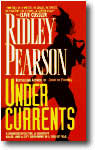
rating: "Undercurrents"
Undercurrents is the first in a series that features Seattle forensic investigator Lou Boldt and police psychologist Daphne Matthews. To determine the time of death, Boldt studies the Puget Sound currents. To Pearson's credit, based on this book, this technique was used to solve a real crime! (Reviewed 2-20-98) Amazon reader
rating: |
||||||||||||||||||||||||||||||||||||||||||||||||||||||||||||||||||||||||||||||||||||||||||||||||||||||||||||||||||||||||||||||||||||||

|
Bibliography (with links to Amazon.com):Featuring Lou Boldt and Daphne Matthews:
Other novels:
Writing as Wendell McCall:
(back to top)
Book Marks:
And More:
(back to top) About the Author:
|

©1998-2003 MostlyFiction.com |






























 from
2 reviews
from
2 reviews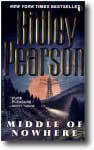
 from
18 reviews
from
18 reviews


 Ridley
Pearson raised in Riverside, Connecticut was the first American to be
awarded the Raymond Chandler/Fulbright Fellowship in detective fiction
at Oxford University, and his novel No Witnesses was selected by
the ALA as one the best fiction books of 1994. Pearson's Lou Boldt series
is being produced as an A&E original movie. For eleven years, Pearson
was on the road as a folk-rock musician and has been a member of the Rock
Bottom Remainders along with Stephen King and Amy Tan. Pearson lives
in Hailey, Idaho with his wife, Marcelle, and young daughter, Paige and
their
Ridley
Pearson raised in Riverside, Connecticut was the first American to be
awarded the Raymond Chandler/Fulbright Fellowship in detective fiction
at Oxford University, and his novel No Witnesses was selected by
the ALA as one the best fiction books of 1994. Pearson's Lou Boldt series
is being produced as an A&E original movie. For eleven years, Pearson
was on the road as a folk-rock musician and has been a member of the Rock
Bottom Remainders along with Stephen King and Amy Tan. Pearson lives
in Hailey, Idaho with his wife, Marcelle, and young daughter, Paige and
their 

