



Recently Published Books in Hardcover:
See what's new in paperbacks...
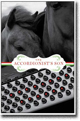
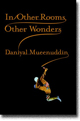
Every Man Dies Alone by Hans Fallada - This never-before-translated masterpiece-by a heroic best-selling writer who saw his life crumble when he wouldn't join the Nazi Party-is based on a true story. It presents a richly detailed portrait of life in Berlin under the Nazis and tells the sweeping saga of one working-class couple who decides to take a stand when their only son is killed at the front. With nothing but their grief and each other against the awesome power of the Reich, they launch a simple, clandestine resistance campaign that soon has an enraged Gestapo on their trail, and a world of terrified neighbors and cynical snitches ready to turn them in. In the end, it's more than an edge-of-your-seat thriller, more than a moving romance, even more than literature of the highest order-it's a deeply stirring story of two people standing up for what's right, and each other. (March 2009) In Other Rooms, Other Wonders by Daniyal Mueenuddin - In the spirit of Joyce's Dubliners and Turgenev's A Sportsman's Sketches, Daniyal Mueenuddin's collection of linked stories illuminates a place and a people through an examination of the entwined lives of landowners and their retainers on the Gurmani family farm in the countryside outside of Lahore, Pakistan.(February 2009) The Accordionist's Son by Bernardo Atxaga - As David Imaz, on the threshold of adulthood, divides his time between his uncle Juan’s ranch and his life in the village, where he reluctantly practices the accordion, a tradition that his authoritarian father insists he continue, he becomes increasingly aware of the long shadow cast by the Spanish Civil War. (February 2009) A Mad Desire to Dance by Elie Wiesel - From Elie Wiesel, a recipient of the Nobel Peace Prize and one of our fiercest moral voices, a provocative and deeply thoughtful new novel about a life shaped by the worst horrors of the twentieth century and one man’s attempt to reclaim happiness. (February 2009) Brothers by Yu Hua - A bestseller in China, recently short-listed for the Man Asian Literary Prize, and a winner of France’s Prix Courrier International, Brothers is an epic and wildly unhinged black comedy of modern Chinese society running amok. (January 2009) Buried Strangers by Leighton Gage - 2nd in the Mario Silva series set in Brazil. (January 2009) The Conqueror by Jan Kjaerstad - Jonas Wergeland has been convicted of the murder of his wife Margrete. What brought Norway's darling to this end? A professor has been set the task of writing a biography of the once celebrated, now notorious, television personality; in doing so he hopes to solve the riddle of Jonas Wergeland's success and downfall. But the sheer volume of material on his subject is so daunting that the professor finds himself completely bogged down, at a loss as how to proceed, until the evening when a mysterious stranger knocks on his door and offers to tell him stories which will help him unravel the strands of Wergeland's life.(December 2008)
Three Musketeers by Marcelo Brimajer - Elisa Traum, a former Argentinian currently residing in Israel, returns to Buenos Aires after twenty years of absence to mourn two friends- two fellow Jews who together with him once comprised "the three musketeers." (October 2008)
Yesterday's Weather by Anne Enright - Enright presents a series of deeply moving glimpses into a rapidly changing Ireland: a land of family and tradition, but also, increasingly, of organic radicchio, cruise-ship vacations, and casual betrayals. (September 2008) Human Love by Andrei Makine - (September 2008) Sorry by Gail Jones - In the remote Australian outback during World War II the emotionally adrift child of an English couple is befriended by equally anomalous strangers. Perdita becomes friends with a deaf and mute boy, Billy, and an Aboriginal girl, Mary. Perdita and Mary soon come to call one another sister and to share a profound bond. They are content with life in this harsh corner of the world, until a terrible event lays waste to their lives. (June 2008) Steer Toward Rock by Fae Myenne Ng - Not since Bone, Fae Myenne Ng's highly praised debut novel, has a work so eloquently revealed the complex loyalties of Chinese America. Steer Toward Rock is the story of a man who chooses love over the law, illuminating a part of U.S. history few are aware of, but one that has had echoing effects for generations. (June 2008)
Gentlemen by Klas Ostergren - Written with an intense regard for storytelling and style, Gentlemen is the most important literary work to emerge from Sweden in the past thirty years – simultaneously celebrating and mourning the post-WWII era with its jazz music, poetry, hidden treasures, and espionage.
|

 Sea of Poppies by Amitav Ghosh
  A Guide to Birds of East Africa by Nicholas Drayson
 Breath by Tim Winton
  The Enchantress of Florence by Salmon Rushdie
  The Story of Marriage by Andrew Sean Greer
  Civil and Strange by Claire Ni Aonghusa
 (back to top)
Related to this Bookshelf:
| DesiJournal.com |
(back to top)
About this Bookshelf:
 One night
while eating dinner and watching Peter Jennings on TV, or I should say
watching the commercials between segments of Peter Jennings' sound bites,
we realized that the actual news in the thirty minute segment was probably
all of twelve minutes at most. Especially since this program follows
the presentator's advice to "tell them what you are going to say,
then say it." All of this "coming up next" takes up valuable
time in which news reporters could have actually provided a far more
reaching story or even more news. Essentially, we weren't watching news
while we ate dinner; we were watching commercials.
One night
while eating dinner and watching Peter Jennings on TV, or I should say
watching the commercials between segments of Peter Jennings' sound bites,
we realized that the actual news in the thirty minute segment was probably
all of twelve minutes at most. Especially since this program follows
the presentator's advice to "tell them what you are going to say,
then say it." All of this "coming up next" takes up valuable
time in which news reporters could have actually provided a far more
reaching story or even more news. Essentially, we weren't watching news
while we ate dinner; we were watching commercials.
So taking control of our TV viewing, we went in search of something else and found that BBC news. What a breath of fresh air; not only are there no commercials, it is like looking through a window at ourselves as we see how others report on events here in the United States. At first I had a hard time with some of the accents, but after a week or so, I didn't notice as much, although occasionally a word will jump out at me as being so non-American in nature, that I get a chuckle. (Since Carl lived in England for seven years, he's not as apt to catch this.) And of course, we found that they cover news from more corners of the globe and give each story more depth than our prime time news.
During the first week we learned that a woman was to be stoned to death in Nigeria for adultery. What a startling realization that such things can and still do happen in this world! (The court did overturn this later.) We also saw court scenes from former Yugoslav President Slobodan Milosevic's trial in Hague and was amazed to learn that he was representing himself and seemingly quite competently at that. We learned that the UN ratified the world's first permanent war crimes tribunal and as such, the rest of the world was celebrating that the International Criminal Court (ICC) would be in affect as of July 1st. The shocking news was the fact that the U.S. vehemently opposes the ICC. It appears that the world is making strides to improve human rights without "us."
I find that watching the BBC coverage of the Israeli-Palestinian conflict as the most upsetting, but educational. Last year while visiting my nonagenarian great-aunt, I met her favorite therapist. She clearly was not originally from America, so I asked where she came from and I learned that she was Palestinian. So we attempted a discussion of life in her country and it quickly became apparent as to how ignorant I was. Finally, she said that the problem is that as Americans we are told only one side and that if I would watch or read news from a non-American source I would find that the majority of world does not side with the Israeli government. Now I'm not going to say here who's right or wrong, but now that I'm watching the BBC news regularly I understand the point she was making to me that day.
Although I think of myself as broadminded, I am culturally speaking, very much American. So my resolution of late is to make it my task to explore as much as I can about what it is to not think as an American. Or at least, what it is like to be American but with a cultural identity that originates from another part of the world. Maybe this is my personal 9-11 aftermath. Maybe it's because I turn forty-five this year. Or maybe it's simply because I can't afford to travel anymore.
Since I deal with everything in life through reading fiction, it is only natural to have one bookshelf that reflects this new found interest.
So here it is -- fiction written about places and people who live and breathe around the world. This new category is not so much about geography as it is about the way one thinks of or one experiences life, similar to the bookshelf called Latin American which is also more of a theme than geography.
Judi Clark, Editor
sometime in 2003