


Recently Published Books in Hardcover:
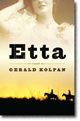
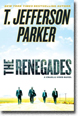
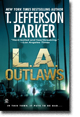
Etta: A Novel by Gerald Kolpan - Beautiful, elusive, and refined, Etta Place captivated the nation at the turn of the last century as she dodged the law with the Wild Bunch, led by Butch Cassidy and the Sundance Kid. Her true identity and fate have remained a mystery that has tantalized historians for decades. Now, for the first time, Gerald Kolpan envisions this remarkable woman’s life in a stunning debut novel. (March 2009) Through Black Spruce by Joe Boyden - Will Bird is a legendary Cree bush pilot, now lying in a coma in a hospital in his hometown of Moose Factory, Ontario. His niece Annie Bird, beautiful and self-reliant, has returned from her own perilous journey to sit beside his bed. Broken in different ways, the two take silent communion in their unspoken kinship, and the story that unfolds is rife with heartbreak, fierce love, ancient blood feuds, mysterious disappearances, fires, plane crashes, murders, and the bonds that hold a family, and a people, together. (March 2009) Selling Your Father's Bones: America's 140 Year Destruction of the Nez Perce Tribe by Brian Schofield - Part historical narrative, part travelogue, and part environmental plea, Selling Your Father's Bones recounts one of the most astonishing journeys in the history of the American West. (February 2009) L.A. Outlaws by T. Jefferson Parker - Los Angeles is gripped by the exploding celebrity of Allison Murietta, her real identity unknown, a modern-day Jesse James with the compulsion to steal beautiful things, the vanity to invite the media along, and the conscience to donate much of her bounty to charity. Nobody ever gets hurt—until a job ends with ten gangsters lying dead and a half- million dollars worth of glittering diamonds missing.
(February 2009 in paperback) Territory by Emma Bull - Retells the story of the 1881 shootout at Tombstone's O.K. Corral, but no writer has yet approached the event with the same compelling mix of history and fantasy as Emma Bull. She blends historical and fictional characters to great effect; although the story is packed with suspense, romance, violence, and action, the psychologically deep, larger-than-life characters drive the narrative. Bull's spare use of magic and sorcery adds a welcome dimension to this often-told story.(December 2008 in paperback) Dead or Alive by Michael McGarrity - Living in London while his wife serves as a military attaché at the American Embassy, recently retired Santa Fe Police Chief Kevin Kerney gets an early morning phone call that changes everything and sends him hurrying home to his New Mexico ranch. (December 2008) Death Song by Michael McGarrity - Michael McGarrity’s eleventh novel in the acclaimed Kevin Kerney series achieves a new depth of masterful storytelling and a plot that will captivate readers. (December 2008 in paperback) The Hearts of Horses by Molly Gloss - In the winter of 1917, when a young woman shows up at his doorstep looking for work breaking horses, George Bliss hires her on. Many of his regular hands are off fighting the war, and he glimpses, beneath her showy rodeo garb, a shy but feisty girl with a serious knowledge of horses. So begins the irresistible tale of nineteen-year-old Martha Lessen, a female horse whisperer trying to make a go of it in a man’s world. (December 2008 in paperback) Snake Dreams by James D. Doss - Dryly humorous, no-nonsense Native American sleuth, Charlie Moon, bring law and what’s going to have to pass for order to Charlie’s Columbine Ranch and the nearby Ute reservation. With a bit of romance and full measure of murder, Snake Dreams, the thirteenth in the series, is a haunting tale best told under a full moon and beside a crackling fire. (November 2008) Consumption by Kevin Patterson - Beautifully epic novel of the Canadian Arctic, infused with stark beauty, fierce truths, and the clash between Inuit tradition and modernity. (July 2008 in paperback) Resolution by Robert B Parker - "I had an eight-gauge shotgun that I’d taken with me when I left Wells Fargo. It didn’t take too long for things to develop. I sat in the tall lookout chair in the back of the saloon with the shotgun in my lap for two peaceful nights. On my third night it was different. I could almost smell trouble beginning to cook . . . .”
(June 2008) The James Boys: A Novel Account of Four Desparate Brothers by Richard Liebmann-Smith - A provocative and strikingly original new voice in fiction reinvents the historical novel–along with American history itself–in this wry “what if?” that merges and mashes up four of our most famous and infamous national icons. (June 2008) The Plague of Doves by Louise Erdrich - A multigenerational tour de force of sin, redemption, murder and vengeance, finds its roots in the 1911 slaughter of a farming family near Pluto, N.Dak. (May 2008) The Outlander by Gil Adamson - Set in 1903, Adamson's compelling debut tells the wintry tale of 19-year-old Mary Boulton ([w]idowed by her own hand) and her frantic odyssey across Idaho and Montana. (April 2008) Out Stealing Horses by Per Petterson - Trond’s friend Jon often appeared at his doorstep with an adventure in mind for the two of them. But this morning was different. What began as a joy ride on “borrowed” horses ends with Jon falling into a strange trance of grief. Trond soon learns what befell Jon earlier that day—an incident that marks the beginning of a series of vital losses for both boys.
(April 2008 in paperback) Divisadero by Michael Ondaatje - the 1970s in Northern California, near Gold Rush country, a father and his teenage daughters, Anna and Claire, work their farm with the help of Coop, an enigmatic young man who makes his home with them. Theirs is a makeshift family, until it is riven by an incident of violence—of both hand and heart—that sets fire to the rest of their lives. (April 2008 in paperback) Stolen Continents: 500 Years of Conquest and Resistance in the Americas by Ronald Wright - Europe's discovery and conquest of the Americas is told as a great saga of achievement from the European point of view. This book tells the Indians' story, one of plague and invasion that crippled great civilizations and killed one fifth of the human race. Reprint. (January 2005) Oh, What a Slaughter: Massacres in the American West: 1846-1890 by Larry McMurtry - A recurring theme in McMurtry's works, both fiction and nonfiction, is the difficulty in bridging the gap between myth and reality in comprehending the settlement of the West. Here, he utilizes a healthy skepticism, sharp analytical skills, and a strong sense of moral outrage to examine six massacres in the trans-Mississippi West. Five involved the slaughter of Native Americans by whites, and one involved the slaughter of whites by other whites. (December 2005) |


(back to top)
Related to this Bookshelf:
(back to top)
About this Bookshelf:
 The
Wild West bookshelf is a collection of books about America, especially the "taming
of the west." As expected, some of the books
on the shelf are about Cowboys
and Indians. But it also includes Native American
fiction (Susan
Power, Louise Erdrich),
new fiction coming out of the West and Southwest (Dagoberto
Gilb), and historical fiction (Suzanne
Lyon, JoAnn Levy, Susan
Sontag). To get at the core of
what America is, it seems to me it's best to look at what America was.
I have found that when writers write fiction about this subject matter,
it transcends genre. I've grabbed books from the Humorous, Favorite Sleuths, Latin
American as well as Contemporary
Fiction bookshelves. The message is the medium here.
The
Wild West bookshelf is a collection of books about America, especially the "taming
of the west." As expected, some of the books
on the shelf are about Cowboys
and Indians. But it also includes Native American
fiction (Susan
Power, Louise Erdrich),
new fiction coming out of the West and Southwest (Dagoberto
Gilb), and historical fiction (Suzanne
Lyon, JoAnn Levy, Susan
Sontag). To get at the core of
what America is, it seems to me it's best to look at what America was.
I have found that when writers write fiction about this subject matter,
it transcends genre. I've grabbed books from the Humorous, Favorite Sleuths, Latin
American as well as Contemporary
Fiction bookshelves. The message is the medium here.
Two books, that I was reading simultaneously, made me realize that it was time to create this book shelf. I had been thinking of doing this for awhile, but then when I finished reading The Almanac of the Dead by Leslie Marmon Silko, I knew it was time. The reality is, I found it easier to create a new category than to try to justify that this book fit into any of the existing bookshelves. But, it wasn't until I began reading Robert Pirsig's Lila did I actually have the nerve to devote a section to two such adverse groups as "Cowboys and Indians."
Pirsig points out the uncanny parallel between our romantic descriptions of the American Cowboy and the characteristics that describe the American Indian. He believes that our deep seated American values really are based on those of the Indians. In fact, there was a time when the White Man was learning from the Indian and imitated everything that he did. Somewhere along the way we lost sight of our teachers and truly believed the Cowboy popped out as a purely American phenomenon. And, to keep this secret, Indians became bad. Nevertheless, the same qualities idealized in Western novels and movies, can just as easily describe an Indian. Pirsig goes so far as to say that the very notion "all men are created equal" is learned from the Indian value system. He says that in studying all of European history it is "self evident" that all men are created unequal.
Interestedly enough, in Almanac of the Dead, Silko's character Angelita La Escapia draws a parallel between Marxism and "old-time people" beliefs. She knows that the idea of communal living comes from the tribes. She is surprised that Marx tells people to remember the past because in the past lies the future. Angelita had only ever heard the white man say forget the past (and for good reason when taking over a people's land). She believes Marx learned his beliefs from the Indian. If she is right, it is all the more reason for Europeans and Americans to hate Communism.
In talking to Carl about starting up this section and what I'd plan to say on this page, he pointed out that Indians have not always been kind and loving. That is probably true. But I think Cormac McCarthy makes a great case for who is really more savage and who taught whom to scalp in his book Blood Meridian. In fact, I am willing to doubt any of my past knowledge about the American Indians. We all know that history is written by the victor.
If we could have embraced more of the Native American traditions, I can't help but think what a better country we would have right now. There is a recurring scene in the Thurlo's novel Death Walker that I love. Whenever someone goes to visit another, they park in the driveway and then sit and wait to be invited into a home. This strikes me as so much more civilized than having people bang on your door.
Other Western sites:
- Women Writing the West, "a nonprofit organization promoting a new view of the women's west."
- Timeline of Events Relevant to the Northern Plains Tribes
Judi Clark, Editor
sometime in 1999